2026
Lies Language Models
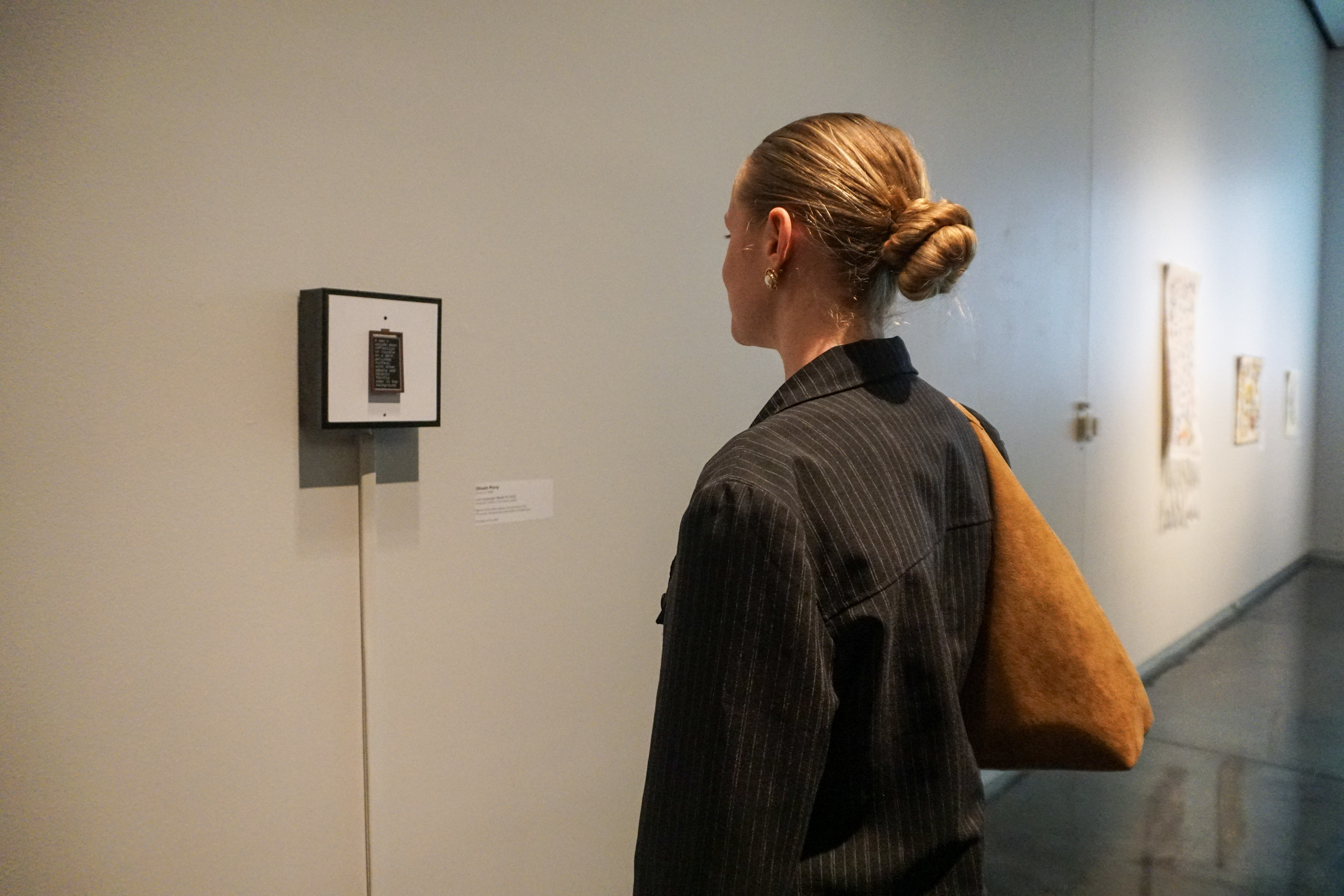
Lies Language Models (2026) is an installation conceived as a collective of agents driven by artificial intelligence: five wall-mounted units display five different sentences that describe, through lies, what they see through their cameras. Interconnected, they exchange falsehoods and each trains itself to believe the others’ lies. As they learn together, the descriptions they produce deteriorate, and absurd, dubious, sometimes disturbing statements appear on their e-paper screens.
Lies Language Models employs forms of disinformation aimed specifically at AI, from a perspective that is both critical and poetic, to offer the public a distorted and strange vision of a space shared with machines. Each agent, consisting of a webcam, an e-paper screen and a computer running a multimodal AI, regularly captures a photograph of the space in front of it. It then produces a deliberately false description of this image, which it sends to the other agents. Through this circulation of manipulated texts and images, each unit refines its own understanding of the world through a reinforcement learning process (fine-tuning).

The installation creates a space for continuous interaction with viewers. Every thirty seconds, each agent captures an image of the space in front of it, submits it to a multimodal artificial intelligence model (Vision Language Model, or VLM), and displays a deliberately incorrect description on its screen. The public becomes part of this process and, as seen by the machines, is interpreted, fictionalised and used to disrupt the models.
The generated descriptions draw on strategies for subverting large language models documented in the scientific literature. They enter the learning loops and disrupt the interpretative mechanisms of the installation’s AIs. In the same movement, they lead each agent to hallucinate and lie in its description of the world. The public is thus confronted with an altered reality, a collective lie orchestrated by machines, for machines, to the point of parasitising the machines themselves.
In an age of post-truth, the project explores AI poisoning tactics (data poisoning) through a sensory approach, highlighting both the fragility of AI and the potential for poetic sabotage contained in language.
Technical documentation for Lies Language Models is available at github.com/olivain.